
As Physical AI gives robots the ability to reason, analyse, and make decisions, the question is no longer whether they will enter the workplace. It is how quickly and effectively enterprises can harness them for work.
Today, many organisations still view robots as experimental technologies.
Over the next three to five years, the biggest shift in robotics will be the move from robots as demonstrations to robots as a robust infrastructure we can rely on.
The first wave is already underway, with autonomous patrolling and inspection robots being deployed across industrial plants, tunnels, substations, and data centres.
However, the next wave will be determined by reliability and safety which are ultimately the tipping points that turn pilot projects into large-scale deployments.
Adoption is likely to follow a pattern of gradual uptake in the early stages. It will be followed by rapid scaling as proven successes at one site are replicated across multiple locations and use cases.
The foundation for robots in the workplace
Humanoid robots are the most visible embodiment of physical AI. The technology is already transforming a wide range of applications. From Autonomous Mobile Robots (AMRs) that streamline warehouse operations to self-driving vehicles, surgical systems, drones, and smart factory robots, physical AI is enabling machines to perceive, reason, and act autonomously in complex real-world environments.
Behind these highly visible applications are four foundational capabilities that ultimately determine whether robots can operate reliably.
Perception, dexterity, planning, and reasoning are the four core pillars of modern robotics. Improvements in these areas are unfolding at different rates, and high-profile demonstrations often blur the line between what is commercially ready and what remains experimental. Without a clear framework to separate proven capabilities from aspirational showcases, leaders risk either investing too early or missing valuable near-term opportunities.
This paradox makes the current state of robotics particularly difficult to analyse. Highly visible demonstrations, especially humanoid robots performing coordinated movements, can indicate rapid development, even when foundational capabilities such as dexterity or causal reasoning remain restricted.
Perception is the most mature of the four pillars. The challenge lies in moving from perception to reliable action in the real world. This shift can be described as the evolution from VA (Video Analytics) to VLA (Vision-Language-Action), where a machine not only recognises a situation but also understands its context and determines the appropriate physical response.
While perception has advanced rapidly, planning and acting in unstructured, dynamic environments, particularly tasks involving manipulation, remain far more difficult to achieve in robotics.
In the near term, the greatest returns are likely to come from capabilities that expand flexibility while lowering engineering complexity.
Scaling up
According to a J.P. Morgan ‘Robotics: The next big frontier in AI’ report, the global robotics market could grow 25 times to $2.5 trillion in annual sales, by 2035.
As the industry achieves economies of scale, such as lower component costs, larger R&D budgets and faster commercial deployment, it will accelerate both innovation and commercialisation. With this, core components will become more affordable and capable. Robotics teams can thus focus more on the capabilities that create value, including autonomy, AI-driven decision-making, and integration into real-world workflows.
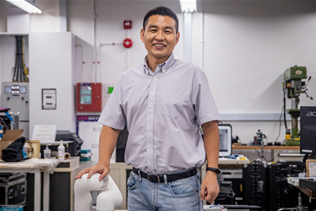
Commercial pressure is healthy for innovation because it forces us to solve the hard, unglamorous problems such as reliability, safety, maintainability and cost, which are the ultimate parameters for measuring success. These are often the problems that matter most. Fundamental research remains essential, but the distance between a research breakthrough and a deployed product is shrinking. Faster commercial deployment will give us large volumes of real-world operating data. That data is the fuel for the next round of innovation.
- Dr Zhang Yan Liang, Chief Scientist, Weston Robot.
A recent humanoid demonstration at Science Centre Singapore showed the progress VLA models have made, but it also highlighted the gap between controlled demonstrations and real-world deployment.
Two things are urgently needed. First, access to real-world data. Robots and AI models improve most when they learn from actual tasks performed in real operating environments, not just from simulations or controlled laboratory settings. Second, the industry needs a deployment mindset. Impact and outcome should be measured by real-world performance, not by how impressive a prototype video looks.
What are the implementation challenges?
According to Dr Zhang Yan Liang, several practical challenges still stand in the way of large-scale real-world adoption.
Latency and determinism: Tasks such as balancing, obstacle avoidance, collision prevention, and human safety require onboard processing with predictable, real-time response times. Even small delays can compromise performance and safety.
Compute within power and thermal constraints: Modern robots increasingly depend on AI-driven perception and decision-making, but delivering high-performance computing on a battery-powered platform is challenging. Systems must fit substantial compute capability into compact enclosures while operating within strict power and heat limits, making efficient edge computing architectures essential.
Connectivity limitations: Many industrial and field environments, including tunnels, manufacturing plants, warehouses, and underground facilities, suffer from poor network coverage and limited GPS availability. Robots must therefore be capable of navigating, sensing, and making decisions autonomously, while synchronising and transmitting data whenever connectivity becomes available.
Systems integration: A robot is only useful if it connects to the customer's existing systems, including command centres, video management platforms and maintenance workflows. This integration work is often underestimated.
Looking at the next frontier
The next phase of growth will require close collaboration among systems integrators, compute providers and end users to ensure technologies are developed, deployed and refined under real operating conditions.

The next frontier, therefore, is not simply making AI smarter, but making AI more aware of what it does not know. Just as a human operator understands when a situation exceeds their expertise and asks for help, autonomous systems must be capable of recognising when they are operating outside their validated domain. A robot should not blindly execute a decision simply because a model produces an answer. It should continuously evaluate its confidence, understand the quality of the available data, and determine whether it has sufficient certainty to act safely. Knowing when to say “no” may ultimately become one of the most important capabilities of agentic AI systems.
-James Lau, Senior Director, Avnet Design Services.
One of the biggest challenges in Physical AI is that robotics workloads are fundamentally different from traditional enterprise AI workloads. A robot is not running a single AI model. It is often running multiple AI models simultaneously.
One emerging approach is the deployment of smaller, domain-specific AI acceleration blocks. Rather than running one massive foundation model everywhere, robotic systems are increasingly adopting multi-tier architectures, where different models perform specialised functions optimised for the task at hand.
Hybrid edge-cloud architectures are also becoming increasingly important. Another aspect is wireless connectivity; the infrastructure has not yet been broadly stress-tested under the conditions that future autonomous operations will require.
The future of robotics will be determined by how effectively organisations distribute intelligence across the robot, the edge, and the cloud. Enterprises must constantly balance competing requirements, including power consumption, latency, data sovereignty, cost, and operational reliability.
The goal is not simply to build smarter robots, it is to create systems that deliver the right intelligence, in the right place, at the right time, using available resources.


