Telecommunications companies are navigating a landscape marked by rapid change, and while they have traditionally not been seen as fast moving, AI is now providing opportunities to innovate more quickly.
In Indonesia, Indosat Ooredoo Hutchison is aggressively shedding its legacy skin. The Indonesian operator is attempting something ambitious: transforming its national infrastructure into a sovereign "AI Grid."
This approach enables the telco to customise offers and services for individual users, utilising its local language AI model and catering to specific service preferences.
Since then, Indosat said it has achieved strong improvements in customer retention and revenue.Over a 90-day period, the company reduced its user churn rate by 50 percent. At the same time, its Average Revenue Per User (ARPU) increased by more than 6 percent, reaching US$2.62.
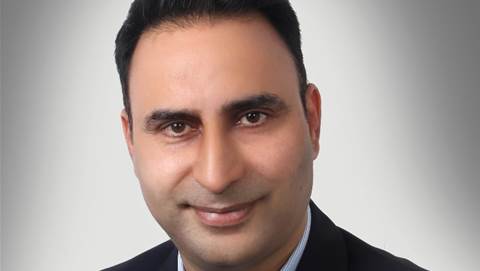
Vikram Sinha, President Director and CEO of Indosat, attributes this growth to the use of AI-driven hyper-personalisation and a revamped customer experience strategy.
Furthermore, with the adoption of AI-driven decision-making, Indosat is now able to optimise capital expenditure allocation for network capacity utilisation, resulting in savings of approximately US$86.5 million which can be reinvested in other areas within the company.
The infrastructure: Air-Gapped and edge-Ready
Under the hood, Indosat’s strategy relies on modern distributed computing. The platform is powered by NVIDIA’s L40s and H100 GPUs, operating on a hub-and-spoke model that orchestrates heavy workloads from a centralised "AI factory" out to a highly distributed edge.
To execute this at a sovereign level, Indosat has expanded its partnership with Google Cloud to deploy Google Distributed Cloud (GDC) across Indonesia for data residency and national security. This means that Indosat can run AI workloads entirely disconnected from the public internet, in compliance with Indonesia’s Personal Data Protection Law. In addition, the telco is able to deliver AI-compute capabilities to users with Google’s Vertex AI right at the edge.
Sahabat-AI: A 70 billion parametre digital companion
The crown jewel of Indosat’s rollout is Sahabat-AI. Originally introduced as an open-source Large Language Model (LLM) ecosystem in 2024, the platform has rapidly matured. By 2026, it has evolved into a robust, multi-modal application available on iOS and Android.
Unlike Western models that often fumble cultural nuances, Sahabat-AI is built to be "the most Indonesian at heart."
Boasting an impressive 70 billion parameters, this engine operates at massive scale and is primed for advanced reasoning tasks. The multi-modal user experience is seamless, whether generating text, creating images or videos, conducting intelligent searches, or diving into coding projects.
The AI model also delivers semantic search capabilities that answer queries, including local dialects, with remarkable accuracy. At its core, the platform is open-source, crafted so regional startups can build their own apps atop the foundational framework.
Beyond consumer use, Sahabat-AI features an "agent-based" architecture. Enterprise and public sector institutions can integrate their own workflows directly into the ecosystem, creating a unified digital interface for everything from healthcare to education.
Adoption over architecture
Despite the heavy investment in frontier tech, Sinha is candid about where the real friction lies in the AI revolution: human behaviour.
“Start with value, not technology. Go all in once you are convinced. This is not a space where incrementalism works. If you stay in pilot mode, you will not capture value. Be prepared that you will fail, but you need to have conviction to push through,” he said.
Reflecting on the company’s deployment, Sinha noted that technology was never the bottleneck. "If I reflect on what we could have done differently, I would probably push even harder earlier, on adoption across the organisation," Sinha added.

The real advantage of AI is not building one great use case; it’s the ability to scale many, quickly and consistently.
- Vikram Sinha, President Director and CEO of Indosat
Going forward, Indosat is embedding AI-linked KPIs across its workforce, shifting AI from an episodic tool to the default mode of operation. Sinha noted that the average age of its employees are about 40 years old, and many were apprehensive about adopting AI in their workflows.
“However, when our employees understood that AI complements their work, we started to see more adoption across the organisation,” he added. Indosat aims to have about 5000 employees supported by 25,000 agentic agents by 2028.
“Our reference architecture is ready for an agent-based system. We will have to treat these agentic agents as our ‘employees’ too,” Sinha remarked.
Indosat’s transition from a traditional telco to an AI ecosystem provider is a blueprint for the global telecom industry. By prioritising high-quality unified data, leaning into sovereign infrastructure, and forcing cultural adoption from the top down, they aren't just riding the AI wave, they are building the grid it runs on.