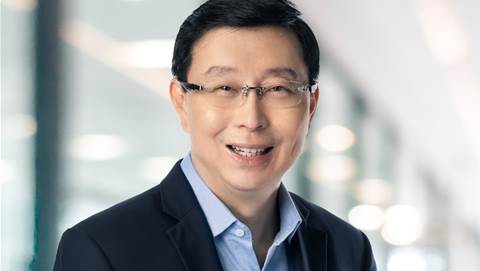
Artificial intelligence is beginning to reshape how organisations work, hire and manage talent, but the bigger disruption may be for employees who fail to adapt rather than for companies.
Speaking to iTNews Asia, Sandeep Chaudhary, CEO of PeopleStrong, said enterprises are increasingly examining which parts of existing roles can be performed by AI and what capabilities employees will need as a result.
“I think it is too early for us to start measuring impact. In my opinion, at this point in time, everybody should measure the adoption,” he said.
From job cuts to task redesign
For Chaudhary, one of the more significant changes is happening at the level of individual tasks rather than entire jobs.
As organisations introduce AI into existing workflows, they are increasingly asking which parts of a role can be automated and which still require human judgement.
“Organisations have started to ask a question: What am I hiring for? And what part of what this person used to do, or this job used to do, can actually be taken over by AI,” he said.
That necessarily does not mean hiring stops. Instead, the composition of roles could change, with organisations hiring people for the parts of a job that require human judgement, interaction and accountability.
This is also beginning to affect recruitment itself. Candidates are increasingly being asked about how they use AI, not simply whether they have experimented with tools such as ChatGPT or Claude.
“We will certainly not need people who don't use AI. We will need people who know how to use AI, who are deeply interested in knowing how to use AI,” Chaudhary said.
Adoption is becoming the harder problem
While technology is advancing quickly, getting people to change established ways of working remains a challenge. Chaudhary described AI adoption as a large-scale change management exercise, with employees ranging from enthusiastic early adopters to those reluctant to move away from familiar processes.
The challenge is therefore not simply deploying an AI tool but getting employees to incorporate it into their regular work.
He argued that organisations should pay closer attention to where AI has actually been deployed, how much employees are using it and what is preventing wider adoption.
Productivity will reshape workforce planning
AI agents add another dimension to that shift by moving beyond assisting employees to independently executing parts of a workflow. For organisations, the practical question is what happens to the capacity released when an agent takes over part of a person's workload.
“If I break down all the tasks that I do, and 40 percent of the tasks today are being done by an agent, either I have more capacity to take on additional 40 percent of the work, or I fundamentally have to work a lesser number of hours to do what I normally do,” he explained.
That calculation could influence future hiring decisions, including how many people organisations need and the skills they prioritise.
Human accountability remains the guardrail
Greater autonomy for AI agents does not remove the need for human oversight. As organisations delegate more tasks to AI, questions around privacy, security, responsible use and accountability become more important.
Chaudhary said organisations need to consider how AI is being deployed, including data privacy, security and the use of enterprise-grade tools. But the more fundamental principle, he said, is that responsibility should remain with people. That principle becomes particularly important when AI is involved in decisions that affect employees, customers or the organisation's reputation.
Chaudhary recommends organisations should stop treating AI as a future technology and instead rethink how existing work can be performed with it.
The challenge will be finding the right balance between automation and human involvement rather than simply maximising the amount of work handed to machines.

I think everything really fundamentally at this point in time does need human in the loop, if not on the loop.
- Sandeep Chaudhary, CEO, PeopleStrong.
For business leaders, that means the next stage of AI adoption is more about redesigning work around the capabilities of both people and machines. AI may execute more tasks, but decisions that are sensitive, long-lasting or central to customer and brand relationships will continue to require human oversight.
“AI can help organisations do what they already do better, faster, and at scale, but the responsibility for deciding what should be done, and who remains accountable, still sits with people,” he added.


.png&h=271&w=480&c=1&s=1)