

Before buying another GPU or upgrading to a more powerful AI model, enterprises should ask a more fundamental question: what is the technology supposed to deliver?
The question is not intended as a NVIDIA joke.
Jay Jenkins, Akamai’s CTO of Cloud Computing, said fear of falling behind has prompted some organisations to rush into AI projects without establishing a clear business case.
“AI is a tool, not the goal,” he said.
That distinction is becoming more important as enterprises move from experimentation to production. Projects launched in 2025 are now confronting the operational realities of running AI at scale, including token costs, compute requirements, infrastructure choices, and network expenditure.
The answer, Jenkins argued, is not necessarily a bigger model or a faster GPU. Depending on the workload, a CPU, a smaller model, or even a conventional API may be more economical.
He expects 2027 to bring a shift towards building AI-powered products and services. Getting there will require companies to understand the economics of their existing systems first.
The AI bill extends beyond tokens
Enterprises evaluating AI costs need to consider the entire infrastructure stack, including model selection, compute, storage, data movement, and network egress. Cheaper tokens do not automatically translate into cheaper applications.
Jenkins cited Singapore-based patent intelligence company GoVeda as an example. According to him, Akamai helped move its AI inference workloads from GPUs to CPUs because the latter offered better economics for its current requirements. The calculation could change as the company's workload grows and GPU utilisation improves.
Akamai's published customer testimonial separately reports a 20 percent cost reduction and a 20 to 30 percent improvement in vector database performance following infrastructure migration and optimisation. These figures concern the broader migration, rather than establishing savings attributable specifically to the CPU switch.
Another customer, game-theory company DeepSolver, illustrates the importance of network costs. Jenkins said Akamai helped optimise its GPU infrastructure, but some of the largest savings came from reducing network egress.
“Hyperscaler egress costs begin at $USD 0.05 per GB. Akamai's egress is $0.005 per GB. That, along with smarter caching of data and output reduction, allows for a 10-15x reduction in cost,” he claimed.
The implication is straightforward: serving an AI application involves costs beyond the model's inference bill. For Akamai, whose business has historically centred on delivering content closer to users, reducing the cost of moving data is also an opportunity to extend its infrastructure into AI computing.
Not every task needs a frontier model
Model selection presents another opportunity to control expenditure. Jenkins credits open-weight models, including DeepSeek, with increasing competitive pressure on foundation-model providers. He expects enterprises to become more selective about where they deploy expensive frontier models.
An India-based customer in the media sector developed an AI router for internal software development. The system directs different tasks to different models according to their requirements and costs.
Jenkins offered an example: a high-end Claude model could handle architecture and planning, Sonnet could manage coding, while an open-weight model could generate documentation and unit tests.
“The illustrative architecture is known as "Hybrid AI". It can use a mix of proprietary models and open weight models to address cost, redundancy, and sovereignty concerns,” Jenkins explained. “Put another way: you could hire only PhDs, but that would be inefficient. You select people with different specialties for different jobs. AI can work the same way.”
Model orchestration is therefore an architectural decision. The most suitable model depends on a task's requirements for accuracy, latency, cost, and other operational constraints.
Jenkins also sees potential in enterprises hosting open-weight models and adapting them through Low-Rank Adaptation (LoRA), a technique for fine-tuning models with relatively limited additional training parameters. Applications could include legal workflows, proprietary company data, and regional languages or dialects, particularly in multilingual markets such as India.
Akamai is positioning its own services in this market. Its inference offering provides access to open-weight models through an OpenAI-compatible API, with serverless, pay-per-token inference and dedicated GPU options. The managed service handles model serving and infrastructure, while customers with the necessary expertise can reserve GPU capacity.
The trade-off is between operational simplicity and control. Managed inference reduces infrastructure overhead, while self-hosting offers greater flexibility but requires expertise in utilisation, scaling, and maintenance.
APAC's agentic AI ambitions remain uneven
Across Asia-Pacific, Jenkins believes many enterprises are still concentrating on internal productivity rather than developing customer-facing AI products.
At one executive meeting with 20 customers, he said, around 18 were using large language models or AI for internal software development. Only two, a technology company and a manufacturer, were incorporating AI into their own products. Jenkins acknowledged that the sample was too small to represent the wider market.
He is, however, seeing more ambitious agentic applications emerge. In Malaysia, AITG developed a framework for autonomous digital workers capable of pursuing longer-running objectives. One application involves video production and marketing. A user provides an objective, reference images, and a message. An agent then generates footage, edits it, submits the result for human review, and makes revisions.
The agent coordinates multiple production tasks rather than simply generating a video clip.
Jenkins also described physical AI applications involving manufacturing equipment, cranes, and industrial robots in Japan, alongside an Australian customer using AI for robotic pathfinding. These applications require decisions close to the equipment, making latency and the distribution of computing resources important considerations.
This is where Akamai sees an opportunity to extend its infrastructure. Following its acquisition of Linode, which brought cloud computing capabilities including virtual machines and Kubernetes into the business, Akamai has invested in GPU capacity through its NVIDIA partnership.
Jenkins described the company's work with NVIDIA AI Grid, a reference architecture for distributed inference, and its ambition to connect core data centres with more than 4,350 edge locations.
The strategy builds on Akamai's content delivery network, which moves digital content closer to users. Jenkins calls its AI ambitions an inference delivery network, extending that distributed infrastructure to AI workloads.
The software layer is equally important. Akamai's acquisition of WebAssembly specialist Fermyon supports lightweight execution across distributed infrastructure. Its Agent Sandbox offering provides an isolated environment for agents to execute generated code, with controls designed to restrict access to systems and data.
As agents increasingly write and execute their own code, those controls become part of the infrastructure required to deploy them safely.
The human remains in the loop
Despite his enthusiasm for autonomous agents, Jenkins sees AI as a tool to augment human capabilities.
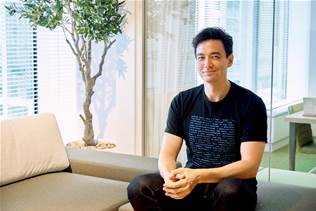
You're the pilot; AI is there to support you. People should define the objectives and understand the technology well enough to direct its use.
- Jay Jenkins, Akamai’s CTO of Cloud Computing
Jenkins argued that organisations should invest in training employees alongside developing AI systems. Drawing a parallel with chess and Go, he suggested that even when computers outperform humans, people can still learn from the strategies machines discover.
The longer-term effects of AI on jobs and industries remain uncertain. For enterprises, Jenkins's immediate prescription is more concrete: establish the business value, understand infrastructure costs, train employees, and retain flexibility in deployment choices.
His prediction for 2027 is that companies will increasingly be judged by what they build with AI, rather than how much AI they deploy. The commercial test, ultimately, is whether customers want what those systems deliver.


